Guide
What States Allow Homeschoolers to Play Sports?
Published
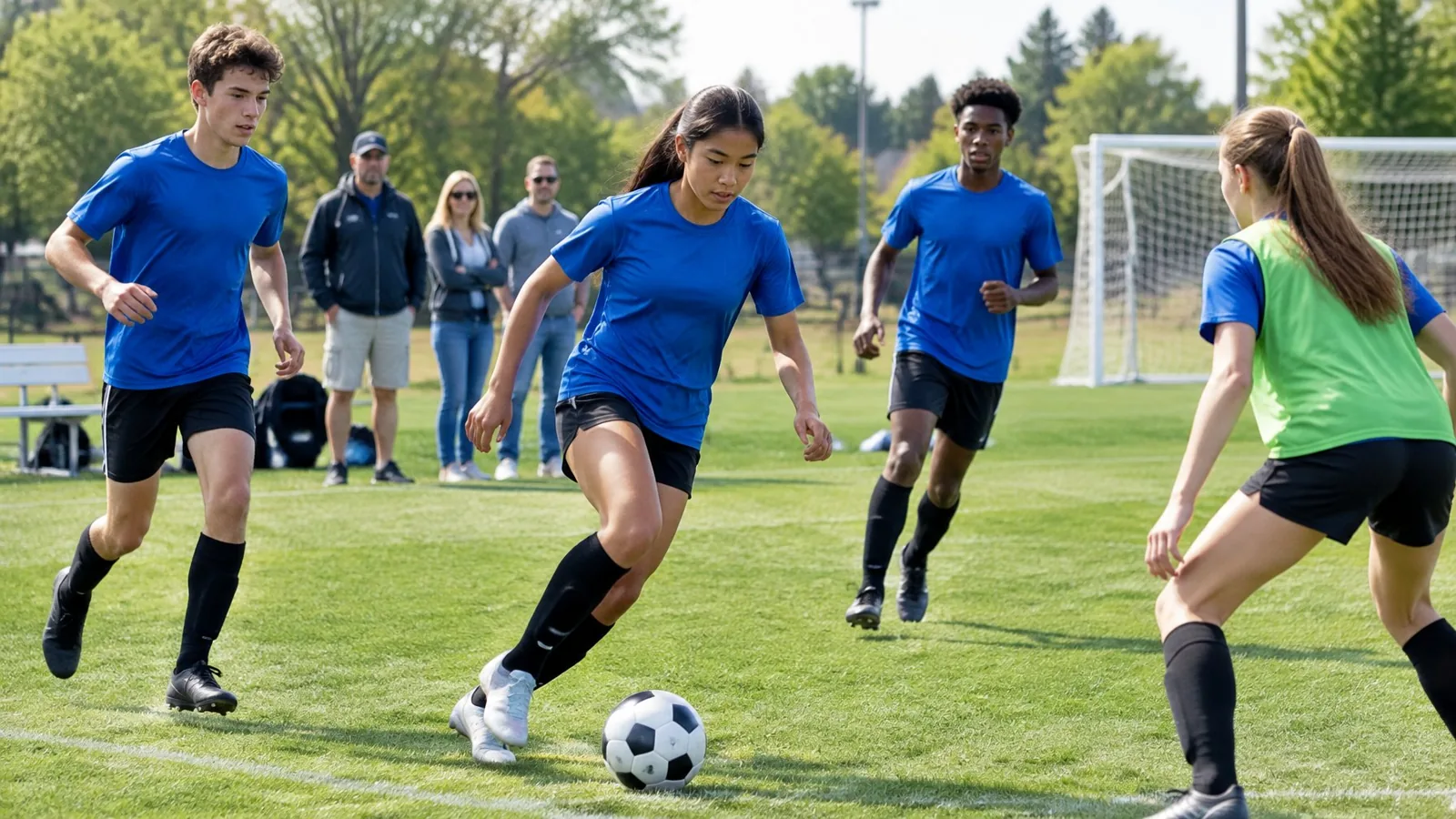
Homeschoolers can play public school sports in 28 states, where a state rule gives them access to public school sports or activities, with conditions. Examples include Arizona, Arkansas, Florida, and Texas.
Access can hinge on where you live, academic eligibility, and whether you meet the school’s deadlines. A state rule may also leave a key decision to a district or athletic association.
- AState rule gives access; conditions apply (28)
- DDistrict, school or association decides (6)
- LLimited or no access (4)
- PPart-time enrollment; sports not specified (2)
- SState law does not specify (6)
- ?Missing information (4)
Key Takeaways
- State rules give homeschoolers access in 28 states, with conditions.
- Six states leave the decision to a district, school, or athletic association.
- Your local school and state rules determine the steps you must take.
The Short Answer
Of the 46 states covered here, 28 have a state rule that gives homeschoolers access to public school sports or activities, subject to conditions. Six leave the decision to local authorities, four have limited or no access, two allow part-time enrollment without spelling out sports, and six do not specify sports access in state law.
The rules apply to different activities and set different eligibility steps. Check your state’s current guidance and ask the school district serving your home which forms, deadlines, and athletic association rules apply.
How State-Level Access Rules Work
State rules define whether a public school must consider homeschoolers for sports or activities, while local rules and athletic association requirements can shape eligibility. Some states set a right to participate, while others let local authorities decide.
A state rule may cover interscholastic athletics, broader extracurricular activities, or both. It may also set limits based on attendance area, enrollment, or academic progress. The state-by-state table below describes each state’s rule in plain terms.
Common Conditions: Residency, Grades, and Deadlines
Eligibility rules often tie access to your home address, academic progress, and timely notice. The exact requirements come from each state’s rule and, where it applies, the school or athletic association.
Residency rules may direct you to the public school serving your attendance area or resident district. In Georgia, home study students in grades 6-12 must notify the principal and superintendent at least 30 days before the semester and take a qualifying course through the school system each semester.
Academic requirements vary. In Idaho, a student must show grade-level proficiency through an approved method or score in the average range or higher on a nationally normed test. In Oregon, a student must show academic eligibility, such as scoring at or above the 23rd percentile on an approved test.
Deadlines and waiting periods can affect when you are eligible. Arkansas requires notice before signup or tryout deadlines, and a student leaving an Arkansas Activities Association member school to homeschool must wait 365 days to play in the resident district. In South Carolina, the student must have been homeschooled for a full academic year and the parent must notify the superintendent in writing before the season starts.
States Where the District Decides
In six states, a local district, school, or athletic association decides whether homeschoolers can join public school sports or activities. Contact the district serving your home and ask which local rules apply.
- Indiana: Participation is up to the public school and the IHSAA’s criteria.
- Kentucky: Each local school district decides whether homeschool students can join extracurricular activities.
- Massachusetts: Each district decides whether homeschool students may join courses, programs, or activities, including athletics.
- Nebraska: High school sports and some activities follow Nebraska School Activities Association bylaws; local school board policy governs other activities.
- New Jersey: Local boards decide and are not required to allow homeschoolers to join classes, extracurriculars, or sports.
- Rhode Island: Each school committee decides whether homeschool students may join public school programs and activities, and athletic league rules add requirements.
States With Limited or No Access
Four states have limited or no access to public school sports. Check the details for your state before planning around a school team.
- Alaska: Full-time high school students in certain alternative programs may join activities at their local public school if they meet eligibility rules and provide transcripts and other records. A home school program qualifies only if it is accredited by a recognized accrediting body; statewide correspondence schools also qualify.
- Delaware: Athletic association rules require full-time enrollment at a member school to play for that school.
- Hawaii: State homeschool rules place responsibility for the child’s educational program, including athletics and other co-curricular activities, on the parent. Those rules do not set out a right to join public school teams.
- New York: State regulations limit interscholastic sports and intramurals to students enrolled in the public school. Districts may allow home-taught students to join school clubs, band, or music lessons when treated as extracurricular activities.
States Where the Law Is Silent
Six states do not specify sports access in state law, while two allow part-time enrollment without spelling out sports participation. Ask your district how it handles homeschoolers who want to join a team.
- Alabama: State law does not specify sports access. Ask the local school district.
- Connecticut: State law does not specify sports access. Ask the local school district.
- Maryland: State law does not specify sports access.
- Mississippi: State law does not specify sports access.
- Oklahoma: State law does not specify sports access. Ask the local school district.
- Virginia: State law does not specify sports access.
- Kansas: State law requires districts to let nonaccredited private school students enroll part time in district courses, programs, or services if they ask and meet the age rules. State law does not spell out interscholastic athletics.
- Washington: State law lets district boards enroll home-based students part time and provide ancillary services. The home-based instruction statutes do not spell out sports participation.
For California, Illinois, Michigan, and North Carolina, check the state page and your local district.
Full State-by-State Table
The table covers 46 states and shows the access group and key conditions for each. Use the linked state page and check with your district before you try out.
| State | Access group | Rule and key conditions |
|---|---|---|
| Alabama | State law does not specify | State law does not specify sports access. Ask the local school district. |
| Alaska | Limited or no access | Full-time high school students in certain alternative programs may join local public school activities if they meet eligibility rules and provide transcripts and other records. A home school program qualifies only if accredited by a recognized accrediting body; statewide correspondence schools also qualify. |
| Arizona | State rule gives access | A homeschooled child may try out at the public school serving the family’s attendance area on the same terms as enrolled students. The parent-instructor must confirm in writing that the child is passing each course and making satisfactory progress. A child who left a public, private, or charter school cannot join for the rest of that school year. |
| Arkansas | State rule gives access | Notify the principal before signup or tryout deadlines and show academic eligibility. The student must meet the same tryout, conduct, practice, drug-testing, physical, and fee rules as enrolled students. A student leaving an Arkansas Activities Association member school to homeschool must wait 365 days to play in the resident district. |
| Colorado | State rule gives access | Home-based students have the same right as enrolled students to join extracurricular and interscholastic activities at a public school. A course generally cannot be required for eligibility unless the activity extends a course, such as a performing arts group. |
| Connecticut | State law does not specify | State law does not specify sports access. Ask the local school district. |
| Delaware | Limited or no access | Athletic association rules require full-time enrollment at a member school to play for that school. |
| Florida | State rule gives access | Home education students may take part in interscholastic extracurricular activities under section 1006.15. They may also use dual enrollment, Bright Futures scholarships, career and technical courses, and district testing and evaluation services. Home education students are eligible for the Family Empowerment Scholarship. |
| Georgia | State rule gives access | Under the Dexter Mosely Act, home study students in grades 6-12 can join extracurricular and interscholastic activities in their resident public school system. A parent must notify the principal and superintendent at least 30 days before the semester and send the latest annual progress report with the instructor’s confirmation of passing grades. The student must take one qualifying course through the school system each semester and meet the same eligibility, conduct, and tryout rules as other students. A student leaving public school for home study must wait 12 months before taking part. |
| Hawaii | Limited or no access | State homeschool rules make the parent responsible for the child’s educational program, including athletics and other co-curricular activities. They do not set out a right to join public school teams. |
| Idaho | State rule gives access | Under the dual enrollment law, a homeschool student must show grade-level proficiency on a state board recognized test, portfolio, or other approved method, or score in the average range or higher on a nationally normed test. The student must live in the school’s attendance area. Proficiency counts for the current and next school year. |
| Indiana | Local decision | Participation is up to the public school and the IHSAA’s criteria. |
| Iowa | State rule gives access | A child under competent private instruction may request dual enrollment in the public school and then join academic and extracurricular activities on the same basis as public school students. The dual enrollment rule covers competent private instruction. |
| Kansas | Part-time enrollment; sports not specified | Districts must let nonaccredited private school students enroll part time in district courses, programs, or services if they ask and meet the age rules. State law does not spell out interscholastic athletics. |
| Kentucky | Local decision | Each local school district decides whether homeschool students can join extracurricular activities. |
| Louisiana | State rule gives access | A public school cannot turn away a student in an approved home study program from extracurricular activities or interscholastic athletics solely because of home study, if the student lives in the school’s attendance zone. The student tries out the same way as enrolled students and must meet the same grade and conduct rules. The rule does not specify access for nonpublic schools not seeking approval. |
| Maine | State rule gives access | Home instruction students may try out after a written application if they meet the same participation, physical exam, immunization, insurance, age, academic, and eligibility rules as enrolled students. They may also take regular classes, join co-curricular activities, and use facilities with school approval, which may not be unreasonably withheld. |
| Maryland | State law does not specify | State law does not specify sports access. |
| Massachusetts | Local decision | Each district decides whether homeschool students may join courses, programs, or activities, including athletics. |
| Minnesota | State rule gives access | School boards must let resident home school students take full part in extracurricular activities on the same basis as public school students. |
| Mississippi | State law does not specify | State law does not specify sports access. |
| Missouri | State rule gives access | Home school students may try out for and take part in activities run by the district or charter school where they live without attending classes. They must prove residency and meet the same conduct, performance, and fee standards as enrolled students. |
| Montana | State rule gives access | Districts and interscholastic athletic bodies may not bar a home school student from resident district extracurricular activities because of enrollment status, though they may apply citizenship or residency rules. Students meet the same standards as full-time students; the parent attests to academic eligibility in writing, and the principal verifies it without testing the student. |
| Nebraska | Local decision | High school sports and some activities follow Nebraska School Activities Association bylaws. Local school board policy governs other activities. |
| Nevada | State rule gives access | Homeschooled children may take public school classes and extracurricular activities if space is available and they qualify, and must be allowed to take part in interscholastic activities and sports. A parent must first file a current notice of intent to participate with the district. |
| New Hampshire | State rule gives access | Home-educated students may use resident district courses and co-curricular programs, including athletics, under a school board policy that cannot be stricter for them than for enrolled students. |
| New Jersey | Local decision | Local boards decide and are not required to let homeschool students take part in classes, extracurriculars, or sports. |
| New Mexico | State rule gives access | Local districts must let home school students join sports and extracurricular activities if they meet the requirements. Eligibility questions go to the New Mexico Activities Association. Part-time enrollment in district courses is up to the district. |
| New York | Limited or no access | State regulations limit interscholastic sports and intramurals to students enrolled in the public school. Districts may let home-taught students join school clubs, band, or music lessons if treated as extracurricular. |
| North Dakota | State rule gives access | Home-educated children may join extracurricular activities through their resident school district or an approved nonpublic school that allows it, under the same standards as full-time students. The choice is noted on the statement of intent, and state activities association transfer rules apply. |
| Ohio | State rule gives access | Home-educated students may join extracurricular activities at the district school they would otherwise attend if they meet the same age, grade, nonacademic, and fee rules as other students. A superintendent may admit them to another district’s activity when their own district does not offer it. |
| Oklahoma | State law does not specify | State law does not specify sports access. Ask the local school district. |
| Oregon | State rule gives access | Districts must let homeschooled students join interscholastic activities in their attendance area if they meet district eligibility rules and show academic eligibility, such as scoring at or above the 23rd percentile on an approved test. Students test every year by August 15 or show progress with a work sample or portfolio. |
| Pennsylvania | State rule gives access | Districts must let home education students join activities such as clubs, musical groups, athletics, and theater if they meet the same eligibility rules as enrolled students. Since 2023-24, districts must also allow certain co-curricular activities, academic courses, and career and technical programs. |
| Rhode Island | Local decision | Each school committee decides whether home-schooled children can join public school programs and activities. State athletic league rules add requirements. |
| South Carolina | State rule gives access | A student must have been homeschooled for a full academic year and meet eligibility rules apart from attendance and enrollment rules. The parent must notify the superintendent in writing before the season starts. Access is at the school zoned for the student’s home. |
| South Dakota | State rule gives access | Public school districts must let alternative instruction children join activities in their resident district. Families provide proof of age and a parent-issued transcript of the prior semester before each season. Students follow the same training and state activities association rules as enrolled students. |
| Tennessee | State rule gives access | Home school students may take part in public school interscholastic athletics, subject to the rules of the school’s athletic association. If a public school offers interscholastic athletics without belonging to such an association, the district must let home school students zoned to that school take part. |
| Texas | State rule gives access | A public school that takes part in UIL activities must let eligible home school students in its attendance zone participate on the same terms as enrolled students, unless the district board adopts a policy opting out. |
| Utah | State rule gives access | Home school students may join extracurricular activities at a public school, usually the school in their boundaries or the one they withdrew from, if they meet the eligibility rules in section 53G-6-703. |
| Vermont | State rule gives access | School boards must have a policy that lets home study students take courses, join co-curricular and extracurricular activities, and use school facilities. Students may take up to two of the five core courses at their local school, plus electives, athletics, and other activities as space permits. |
| Virginia | State law does not specify | State law does not specify sports access. |
| Washington | Part-time enrollment; sports not specified | District boards may enroll home-based students part time and provide ancillary services. The home-based instruction statutes do not spell out sports participation. |
| West Virginia | State rule gives access | Home-instructed students may join activities at the public secondary school serving their attendance zone if they show satisfactory yearly progress, are under 19 on August 1, are amateurs, and follow the same conduct, physical exam, and vaccination rules as other athletes. Reasonable fees may be charged. |
| Wisconsin | State rule gives access | School boards must let resident homeschooled students take part in interscholastic athletics on the same basis as district students. |
| Wyoming | State rule gives access | A resident school-age child who is not a full-time student in the district must be allowed to join any district activity, including Wyoming High School Activities Association sports. The district may charge association fees and a participation fee no higher than full-time students pay, but no tuition. The student follows the same rules as other participants. |
Rules come from each state's official sources as recorded on our state guides. Requirements change, so confirm with the official source linked on each state guide before you file.